
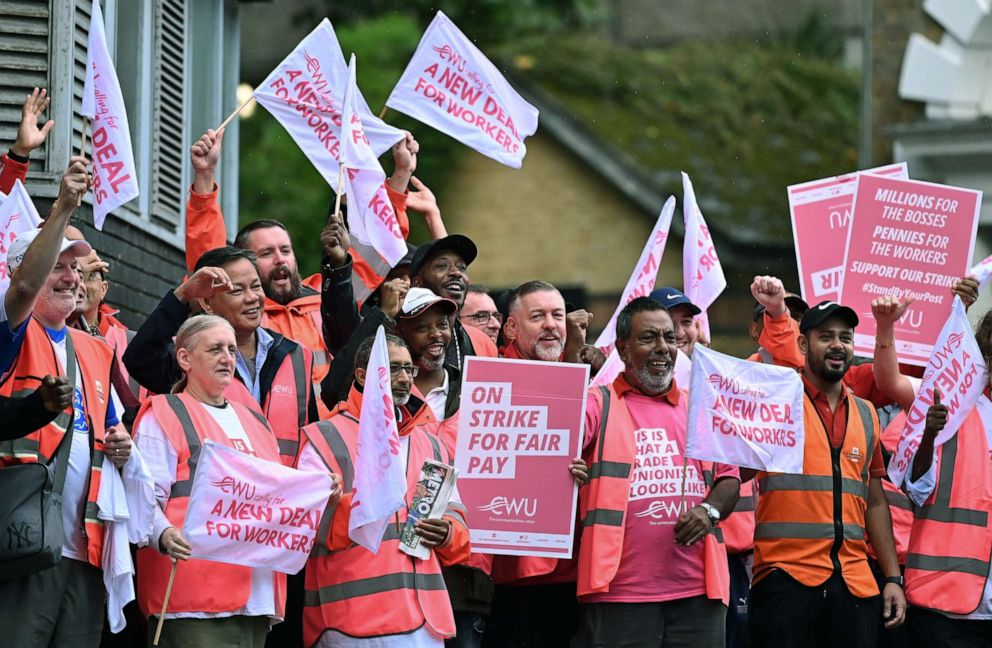
Photo Credit: Justin Tallis/AFP via Getty Images
10th July 2025
(What is degrowth? Click here to read a brief explainer).
Mainstream climate politics has spent years pitting climate against the working class. It paints miners and factory workers as the problem, puts them on one side of the fence and ecology on the other. This framing is not just wrong. It is sabotage. It splits the very alliance that could turn the tide. Workers are not the cause of climate breakdown. They are its frontline victims. The rich are not just responsible for a disproportionate share of emissions. They are the ones shaping the economy around profit and disposability, pushing risk and cost downward onto us.
Industrial activity drives the crisis, but it does so through labour. That labour is exploited twice. People work in jobs that treat them as disposable because they need money to survive. At the same time, this work accelerates the destruction of the very ecosystems we all depend on. The crisis is shared because its source is shared.
Workers know this. They do not need to be lectured on the unsustainability of the system. They live that knowledge. In factories and in distribution warehouses, they see the waste every day. They see time and energy spent for nothing. They know when their labour creates value and when it just keeps the wheels spinning for someone else’s gain.
When politicised, this knowledge can become tools for transformation. These struggles do not need to adopt the language of degrowth to carry its substance. What they need is support, analysis, and organisation that help them see themselves not as isolated cases but as part of a larger fight.
Degrowthers need to be present in the places where economic life is being shaped. This means showing up where workers are already organising and listening to what they have to say, it means building strategies that recognise their central role. The movement cannot wait for policy frameworks or new metrics. It must build around the capacity of workers to withdraw cooperation from harmful processes and reimagine their labour as something more than a function of markets.
A climate politics that speaks only in academic terms of ‘material throughputs’ and ‘metabolic rifts’ will never inspire the people who keep society running. And a labour politics that ignores ecological collapse will not last. Both will fail unless they recognise that their futures depend on each other. The same elites who block wage increases block serious climate action. The same economic model that makes people disposable treats ecosystems the same way.
What we need is an ecological movement rooted in class power. That will not come from above. It will have to be forceful. Through walkouts, strikes, and refusals to accept a future measured only in profit.
Degrowth has no future without conflict. The institutions that profit from growth will not step aside. The parties that manage the crisis will not act unless pressured. And that pressure will not come from moral persuasion. It will emerge from resistance on shop floors, construction sites, call centres, warehouses, energy plants, and in a thousand other places. That is where real power sits, those are the frontlines of any future worth fighting for.
Written by Kevin Picado.
 The WCCA