
19th July 2025
How are workers organising to defend their rights, and the rights of the broader community? And how are they campaigning to transform industries, so that the production of goods and services is not harmful to people and the planet? Meaningful change starts in our workplaces and communities, and we have rounded up five workers’ struggles to show the different ways that it can be done:
Amazon India Workers Union
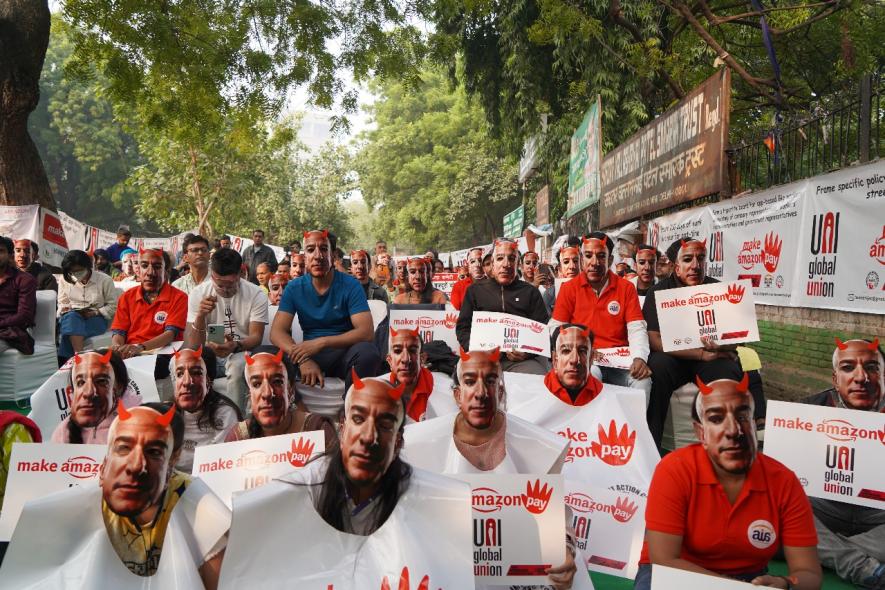
Photo Credit: News Click
The Amazon India Workers Union is the first distinctly working class organisation of warehouse workers in the country. It was formed in response to the poor working conditions and inadequate rights of Amazon’s employees: a survey of workers found that 43.4% were unable to meet their basic needs on their current wage, 87% of warehouse workers did not have enough time to go to the toilet, and less than a quarter of warehouse workers (19.8%) and drivers (24.4%) felt that Amazon was a safe environment to work in. The union’s demands are:
- Minimum monthly salary of ₹25,000 for all warehouse workers.
- Proper 30-minute lunch breaks.
- Seating arrangements and restrooms for workers standing for long hours.
- Regularisation of all workers after 240 working days in a year.
- The eradication of harassment, disrespectful language, and discrimination against female workers.
- Affordable canteens with worker participation in every warehouse.
- The formation of grievance committees with worker representation in every warehouse.
- Temperature control systems in all warehouse sections.
- Weather-appropriate uniforms for all workers.
- For the Amazon India Workers’ Union to be officially recognised, and for immediate negotiations on their general demands.
Crew Union Mobilisations
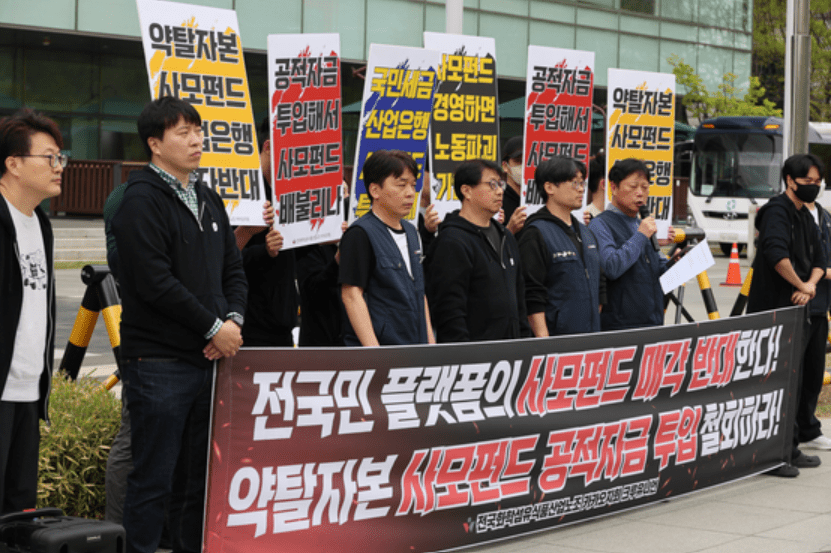
Photo Credit: YONHAP
High employee turnover rates in South Korea’s IT sector have long undermined efforts to establish workers’ unions. Despite these challenges, employees of the mobility platform Kakao Mobility unionised in 2018. Known as Crew Union, they will stage their first ever full-day strike on June 25th – less than a week from now. This action follows a recent four-hour strike, large-scale rally, and a two-hour walkout in solidarity with Naver’s labour union.
Kakao Mobility’s change in business strategy served as the catalyst for these mobilisations: as speculation grew over management exploring options to sell the company to private equity, workers have expressed concerns over their job security. According to Crew Union, they were offered unacceptably low compensation despite strong company performance. They have emphasised the significance of this collective action, as it is their first full-day strike since the union’s formation.
GKN Factory Occupation
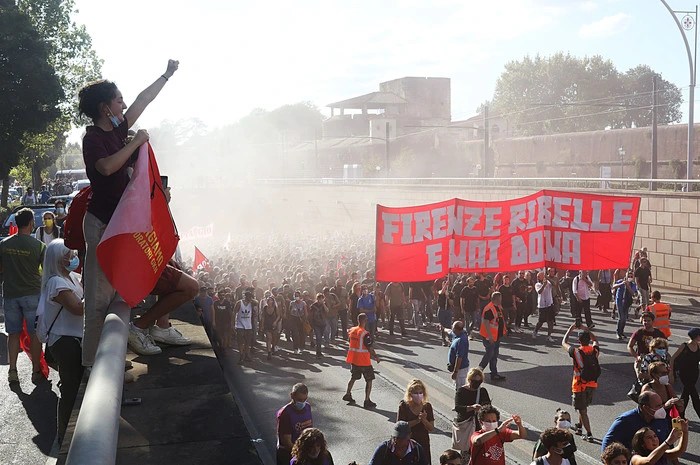
Photo Credit: Angry Workers of the World
In 2021 the owners of the GKN Factory in Florence, Italy, shut down production and fired all 422 of their workers. Their rationale for doing so was that it is cheaper to move production outside of Europe. In response, the workers occupied the factory and launched an international solidarity campaign. As of this article’s publication (June 2025) they are still there, making it the longest factory occupation in Italian history.
The workers aim to take ownership of the factory by transforming it into a co-operative, and have launched a shareholders campaign to help them achieve this goal. In collaboration with academics and scientists, they have created a plan to reorient production to create goods that are socially and ecologically beneficial, such as cargo bikes.
The regional government is now putting together a consortium to buy the factory off the current owners and hand it to the workers. It has been said that this will be ready in July, meaning that production could begin soon afterwards.
Heat Strike
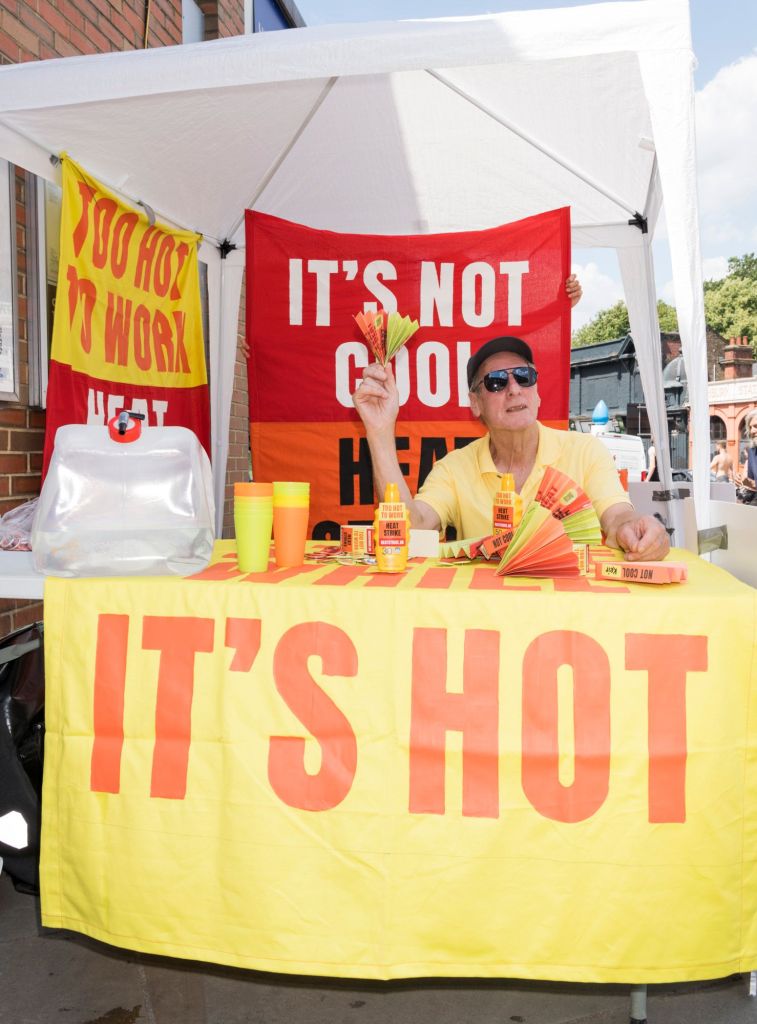
Photo Credit: Centre for Climate Crime and Climate Justice
Heat Strike are a UK-based coalition of groups and unions who aim to protect the lives of workers and the vulnerable, by pressuring politicians and workplaces to provide adequate protections against extreme heat. Heat Strike’s demands are:
Set a national maximum working temperature.
There is no maximum working temperature in the UK. The government must set a national maximum indoor working temperature of 30°C, or 27°C for those doing strenuous work.
Establish a heat wave furlough scheme.
The government must work with employers and trade unions to set up a heat wave furlough scheme for when workplace temperatures can’t be kept below 30°C.
Make a climate action plan.
As Heat Strike point out, the government’s climate action plan has been ruled illegally inadequate. They demand that the government establishes a proper plan to protect workers and the vulnerable, and to avoid the worst of climate breakdown in the years to come.
The Landless Workers Movement
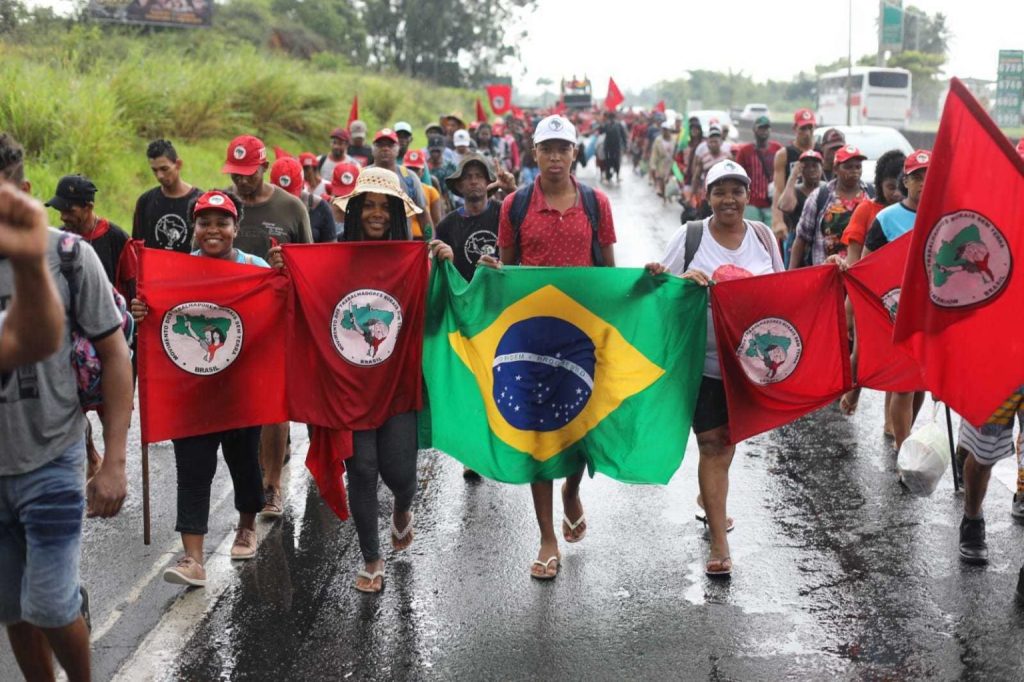
Photo Credit: MST/BA
Movimento dos Trabalhadores Rurais Sem Terra (MST) – Brazil Landless Workers Movement, is a mass social movement formed by rural workers to fight for land reform and against injustice and social inequality in rural areas. They achieve this, in part, through land occupations. MST have three goals:
- Fight for Land – for families to have enough land to survive with dignity through their own labour.
- Fight for Agrarian Reform – restructuring land ownership and use.
- Transform Society
Before or during the land’s initial occupation, MST organises encampments for landless families, who then participate in organising and preparing what is needed for the encampment. These sites play a key role in establishing co-operation and solidarity between groups.
MST has led more than 2,500 land occupations with approximately 370,000 families, who collectively settle on 7.5 million hectares of land that was won through these occupations. The families continue to push for additional reforms – for schools, credit for agricultural production and co-operatives, as well as access to health care.
 The WCCA